Why Chasing Generic Citations Is Hurting Your Google Business Profile SEO in Oakland
The landscape of local search in 2026 has shifted beneath the feet of many Oakland entrepreneurs. For over a decade, the standard operating procedure for local visibility was simple: build as many citations as possible. But as we move into a new era of search, the “old way” is no longer just ineffective – it is actively damaging. My name is Kathy Alice Brown, and with over 15 years of experience as an SEO consultant, I have seen the rise and fall of various ranking “hacks.” Today, the “quantity over quality” approach to citations is a liability.
Recent BrightLocal research indicates that while 90% of SEO experts still believe accurate citations are vital, the definition of “accurate” has evolved. In 2026, Google’s AI-driven algorithms, powered by Gemini and SGE, are no longer satisfied with a mere mention of your name, address, and phone number (NAP) on a generic directory. They are looking for hyper-local relevance and active engagement. If you are still chasing generic citations, you aren’t just wasting your marketing budget; you are diluting your google business profile seo and confusing the very algorithms you need to satisfy.
The “More is Better” Myth: Why 1,000 Citations Won’t Save Your Google Business Profile SEO
Many Oakland business owners – from plumbers in Fruitvale to attorneys in Downtown – fall into the trap of buying “bulk citation packages” from platforms like Fiverr or low-cost offshore agencies. These packages promise 500, 1,000, or even 2,000 citations on directories you’ve never heard of. The logic seems sound: more mentions equals more authority. However, data from The Hoth suggests that citations now account for only about 8% of local ranking factors. The other 92%? That is comprised of google business profile optimization, on-page signals, and review velocity.
When you flood the internet with generic citations, you create “noise.” Most of these low-tier directories have zero traffic and zero local relevance to the East Bay. Google’s current algorithm can easily distinguish between a high-value mention on a site like The Oaklandside and a “ghost” listing on a generic directory based in another country. Chasing volume over value leads to a phenomenon I call “Citation Chasing,” where business owners spend months correcting bad data on useless sites instead of building real local authority. To truly rank google business profile listings in a competitive market like Oakland, you must pivot away from the “bulk” mindset and toward a surgical, high-relevance strategy.
The Oakland Proximity Trap: How Generic Data Dilutes Local Relevance
Google’s local algorithm operates on a triad: Proximity, Relevance, and Prominence. In a city as diverse and geographically distinct as Oakland, generic citations often fail the “Relevance” test. If your business is located in the Temescal neighborhood but your generic citations simply list you as “Oakland, CA,” you are missing out on the hyper-local signals that Google uses to serve results to users standing on 40th Street.
Generic directories often use outdated zip code maps or broad city categories that don’t reflect the “neighborhood-first” search behavior of 2026. This dilution makes it harder to own your specific Oakland neighborhood without outspending the big guys. When your data is generic, Google’s confidence in your specific location wavers. If the algorithm isn’t 100% sure where you are located relative to the searcher, it will default to a competitor who has stronger, neighborhood-specific signals. In the hyper-competitive Oakland Map Pack, being “generally” in Oakland is a recipe for being invisible.
2026 AI Search Filters: Why You Need a Google Business Profile SEO Strategy Over Bulk Listings
The introduction of AI search filters in 2026 has fundamentally changed how local leads are generated. Tools like Gemini and Search Generative Experience (SGE) are designed to filter out “static” noise. They prioritize businesses that show signs of life – real-time updates, “in-stock” inventory signals, and recent customer interactions. Generic, static citations provide none of this. In fact, if you have hundreds of unclaimed or unfinished citations floating around the web, AI filters may flag your business as potentially defunct, leading to a “shadow ban” in the local map pack.
To avoid this, you need a technical deep dive into your existing digital footprint. Using a google business profile audit tool is the first step in identifying which of your citations are helping and which are hurting. These AI filters are looking for “verified” signals. A single, well-maintained listing on a local Oakland neighborhood association site is worth more to an AI filter than 100 listings on generic “business finder” sites. The goal is no longer just to exist; it is to prove you are active and relevant in the current moment.
The High Cost of Inconsistency: A Case Study in Oakland Map Pins
Inconsistency in your NAP data is the silent killer of local rankings. I recently consulted for an HVAC contractor in East Oakland who couldn’t understand why their rankings had plummeted despite buying a “top-tier” citation package. Our audit revealed that several of the new citations had slightly different address formatting – one used “St.” while another used “Street,” and one even had an old suite number from three years ago.
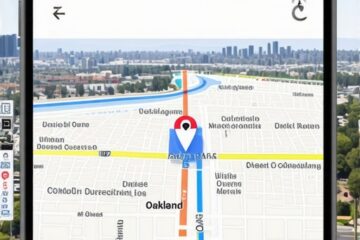
This inconsistency caused a “Ghost Search” drain. Google’s algorithm became confused about the exact location of the business, and as a result, the map pin began to drift in search results. In some cases, the pin was appearing blocks away from their actual office, leading potential customers to dead ends. This is exactly why your Oakland shop’s map pin is actually pushing customers away. When your data is fragmented across the web, your local map pack seo suffers because Google loses trust in your business’s physical reality. In 2026, trust is the primary currency of search.
To prevent this, businesses must utilize a google maps rank tracker to monitor how their pin is appearing across different parts of the city. If you see your ranking drop as you move from Piedmont to Adams Point, it’s often a sign that your local signals are inconsistent or diluted by generic data.
Quality Over Quantity: The 2026 Framework for Oakland Citations
If generic citations are hurting you, what should you do instead? The 2026 framework for Oakland businesses focuses on “High-Value” signals. This involves a three-pronged approach:
- Niche-Specific Directories: If you are a lawyer, your listing on the California Bar Association or a specialized legal directory carries ten times the weight of a Yelp listing. These sites have high topical relevance.
- Hyper-Local Oakland Mentions: Seek out mentions on platforms like The Oaklandside, the Oakland Chamber of Commerce, or specific neighborhood blogs like Rockridge News. These provide the “neighborhood” handshake Google craves.
- Active Engagement Signals: A citation is no longer a “set it and forget it” asset. You must ensure that your google business profile optimization includes regular posts, photo updates, and review responses.
Managing this level of detail across multiple platforms can be overwhelming, which is why many successful East Bay firms are turning to local seo automation tools. These tools allow you to sync your data across the most important “Tier 1” directories while ignoring the low-value noise that causes data fragmentation. This ensures that your citation building services are focused on quality, not just filling a spreadsheet with links.
How to Audit and Fix Your Oakland Search Presence
The first step to recovery is a moratorium on new, generic citations. Stop the bleeding by identifying where your current data is incorrect. You need to understand the exact reason your Oakland map impressions never turn into real foot traffic. Often, it’s because your “impressions” are happening for the wrong keywords or in the wrong neighborhoods due to poor citation targeting.
Follow this checklist to clean up your presence:
- Perform a NAP Audit: Ensure your Name, Address, and Phone number are identical across your website, Google Business Profile, and major social media profiles.
- Remove “Back Alley” Pins: Use a map tracker to see if your business is being displaced by competitors with better local signals.
- Prune Low-Quality Citations: If you find your business listed on spammy, irrelevant directories, don’t be afraid to request removal or simply stop updating them.
- Optimize for AI: Update your Google Business Profile weekly with “real-time” content to satisfy 2026 AI search filters.
By shifting your focus from quantity to quality, you can finally rank in the google map pack for the terms that actually drive revenue. It’s about building a digital footprint that reflects your actual standing in the Oakland community.
Conclusion: Becoming a Pillar of the Oakland Community
In 2026, Google is no longer a simple phone book; it is a sophisticated AI recommendation engine. It wants to recommend businesses that are pillars of their community, not just entries in a database. Chasing generic citations is a relic of 2010 SEO. Today, success requires a hyper-local, high-relevance strategy that prioritizes the user experience and data accuracy above all else.
If you are ready to stop “chasing” and start ranking, you need the right local seo tools and a strategy tailored to the unique competitive landscape of the Bay Area. Using tools to scale local seo properly can help you manage this transition without losing your mind – or your rankings.
If your Oakland business is struggling to break into the top three of the Map Pack, or if you’re worried that your current citation strategy is doing more harm than good, I can help. Contact me, Kathy Alice Brown, for a comprehensive Oakland Local SEO audit. Let’s build a search presence that truly represents the quality of your business.