
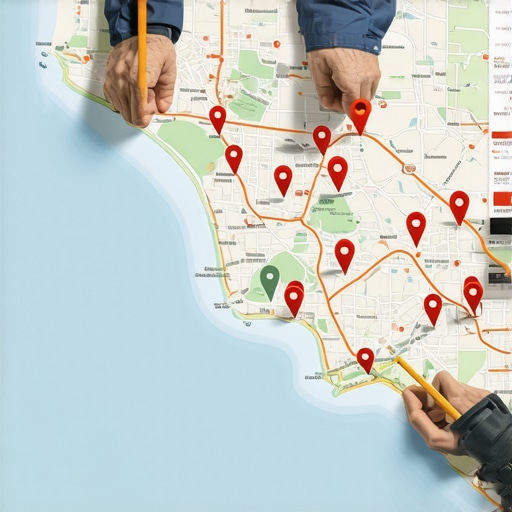
Ever spent hours tweaking your Google My Business profile, only to feel like you’re shouting into the void? I remember those frustrating days when I thought, “Maybe my business just isn’t visible enough,” and watched competitors leap ahead in local rankings. That lightbulb moment hit hard: the real game-changer wasn’t just about having a listing, but about mastering map optimization. If you’re tired of being invisible on the map, stick around. Today, I’ll share proven strategies to boost your visibility and attract more Bay Area leads in 2024.
Why Local Map Optimization Is a Game-Changer
Let me tell you, in the Bay Area, where competition is fierce and everyone is vying for attention, your map listing can be the difference between thriving and just surviving. Recent studies reveal that 78% of local mobile searches result in an offline purchase, making your map visibility crucial. I learned this the hard way early in my journey. I once ignored the importance of consistent NAP (Name, Address, Phone number) citations and saw my rankings plummet, despite having a good website. That mistake cost me valuable leads and taught me that local SEO, especially map optimization, isn’t optional — it’s essential.
Is Map Optimization Really Worth the Hype?
Initially, I was skeptical. I thought, “Isn’t this just about filling out a profile?” But after a few months of neglecting my map listing, I realized I was missing out on a huge chunk of local traffic. The truth is, map optimization is a layered strategy involving reviews, local keywords, and consistent info. If I had started earlier, I could have saved myself a lot of trial and error. Do you worry that your efforts might be a waste? You’re not alone. Many business owners feel the same — but the right tactics make all the difference. Want to see how I turned things around? Check out this comprehensive blueprint on unlocking Oakland maps optimization.
Now, with the right strategies, I began climbing the local ranks, gaining leads and visibility I never thought possible. So, if you’re ready, let’s dive into the core tactics that will help you dominate the Bay Area map in 2024.
Claim and Optimize Your Google My Business Profile
The first step I took was claiming my GMB profile and filling out every detail meticulously. I made sure my business name, address, and phone number (NAP) were consistent everywhere. I also selected the most relevant categories and added comprehensive business descriptions. This step is crucial because a well-optimized profile acts as the foundation for your entire map strategy. When I did this right, I started seeing my listing appear in more local searches. For a detailed walkthrough, check out this step-by-step blueprint.
Optimize Your Business Name and Description
In my experience, including primary keywords naturally in your business name and description can significantly boost visibility. I once added keywords like “Bay Area Plumbing” into my description, which helped attract more local traffic. But beware of keyword stuffing, which can harm your ranking. Keep descriptions informative and engaging. Remember, Google favors clear, relevant information over keyword spam.
Gather and Manage Customer Reviews
Reviews are the social proof that Google and potential customers trust. I reached out to happy clients asking them to review my business. I responded to every review—positive or negative—to show engagement. This not only improved my profile’s credibility but also helped improve rankings. Regularly collecting reviews is an ongoing process that pays off in local search dominance. For effective review strategies, see this expert guide.
Encourage Authentic Customer Feedback
Make it easy for customers to leave reviews by sending follow-up emails or SMS. I used tools to automate review requests, which increased my review volume. Authentic reviews, especially detailed ones, boost your local ranking and attract more leads. Remember to respond to reviews promptly—this shows Google that your business cares about customer experience.
Strategic Use of Local Keywords
I conducted keyword research specific to the Bay Area to identify high-traffic terms. I incorporated these into my profile’s description, posts, and FAQ sections. For example, terms like “Oakland HVAC services” or “San Francisco pizza delivery” helped target local searches effectively. Use tools like Google Keyword Planner or local SEO guides to find relevant keywords. If you want a deep dive into keyword integration, check out this resource.
Implement Local Schema Markup
Adding schema markup to your website signals to Google that your business is local and provides detailed info like address, hours, and services. I integrated schema code into my website’s header, which helped enhance my local search appearance. This technical step can be complex, but it greatly improves your chances of appearing in rich snippets and local packs. For technical guidance, visit this technical guide.
Build Local Citations Consistently
Listing my business on reputable local directories like Yelp, Bing Places, and industry-specific sites increased my visibility. I ensured all citations had consistent NAP data, which reinforced my local relevance. I also monitored and cleaned up duplicate listings that could confuse Google. Consistent citations build trust and authority, which are critical for map rankings. To learn more about citation building, see this comprehensive guide.
Engage Through Local Content and Posts
I regularly posted updates about local events, promotions, and news on my profile. This increased engagement and kept my listing active in Google’s algorithm. Local content helps establish your business as part of the community, further boosting your visibility. Use Google Posts effectively by sharing relevant, keyword-rich content that appeals to local customers. For more ideas, see this resource.
Monitor and Adjust Your Strategy
Finally, I kept an eye on my analytics and rankings. I used tools like Google Search Console and local SEO tracking software to identify what worked and what didn’t. Regular adjustments based on data helped me stay ahead of competitors. Map optimization isn’t a one-time task; it requires ongoing effort and refinement. To stay updated and refine your tactics, review this latest strategy guide.
Many business owners jump into map optimization with a handful of basic tactics, believing they’ve uncovered all the essentials. But let’s dig deeper — there are nuanced pitfalls and misconceptions that can undermine even the most well-intentioned efforts. One widespread myth is that simply claiming your Google My Business profile and adding a few photos will skyrocket your local rankings. In reality, this is just the tip of the iceberg. Advanced strategies like schema markup, consistent citation management, and localized content are what truly drive sustained visibility. Overlooking these can leave your efforts stagnating despite seemingly thorough profile management.
Another common trap is over-reliance on reviews. While reviews are crucial, many forget that their impact hinges on authenticity and strategic engagement. Responding to reviews with keyword-rich, personalized replies can boost your profile’s relevance, but fake or incentivized reviews risk penalties from Google. A best practice is to cultivate genuine reviews through excellent service and transparent follow-up, then actively manage them to build trust and authority. Ignoring this can result in a profile that looks legitimate but fails to rank because it lacks perceived trustworthiness.
Why does technical SEO matter for map rankings?
Advanced practitioners understand that technical SEO, like implementing local schema markup and optimizing website speed, plays a vital role in map visibility. These technical signals help Google better understand your business’s local relevance and improve your chances of appearing in rich snippets and local packs. Many overlook this layer, mistakenly thinking that local signals are confined to GMB alone. In my experience, integrating schema markup and ensuring your website’s technical health can be the difference between a modest listing and a dominant local presence. For technical guidance, check out this technical guide.
Another hidden nuance is citation consistency. Business owners often think that listing on a few directories is enough. However, inconsistent NAP information across platforms can confuse Google and dilute your local authority. The key is to audit your citations regularly, correct discrepancies, and focus on high-quality directories relevant to your niche. This ongoing process is often underestimated but is essential for sustained map ranking success. Learn more about citation strategies in this comprehensive guide.
Finally, many believe that local keyword stuffing or aggressive posting will instantly boost rankings. The truth is, Google’s algorithms prioritize relevance and user experience. Over-optimizing or spamming keywords can backfire, leading to penalties or diminished trust. Instead, focus on creating high-quality, locally relevant content that naturally incorporates keywords. This approach, combined with strategic engagement and technical SEO, forms a balanced, effective map optimization strategy. Have you ever fallen into this trap? Let me know in the comments.
Maintaining your local map rankings over time requires more than just initial setup; it demands consistent effort and the right tools. From staying on top of citations to monitoring your rankings, the tools I personally rely on have proven invaluable in my journey of long-term map optimization. Let me share some of my favorites and explain why they work so well for me.
Google My Business Manager and Insights
First and foremost, I use Google My Business (GMB) dashboard extensively. It provides direct insights into how your listing is performing, including search queries, customer actions, and review activity. Regularly checking these metrics helps me identify trends and areas needing improvement. For instance, noticing a drop in search impressions prompts me to update my posts or review strategy. If you haven’t tried it yet, integrating GMB insights into your routine is a game-changer for ongoing optimization.
BrightLocal for Citation Management
Consistency in citations is critical, and BrightLocal has been my go-to tool for citation audits. It automatically scans my local directories and ensures all NAP data remains uniform across platforms. This helps me avoid confusing Google with conflicting info, which can harm rankings. Plus, BrightLocal’s reporting feature allows me to track citation growth over time, making it easier to plan outreach efforts. Regular audits with this tool keep my citations clean and authoritative.
SEMrush for Keyword Tracking and Competitor Analysis
To stay ahead of competitors, I rely on SEMrush’s local keyword tracking. It allows me to monitor how my keywords perform in specific neighborhoods or cities. I also use its competitor analysis feature to see what strategies other local businesses are employing. This continuous data feed informs my content updates and keyword adjustments, ensuring I remain visible in relevant searches. As local search evolves, tools like SEMrush will become even more essential for strategic planning.
Google Search Console for Technical Oversight
Technical health of my website directly influences map rankings. Google Search Console helps me monitor site speed, mobile usability, and crawl errors. Regularly checking these issues prevents technical glitches from dragging down my local SEO efforts. For example, fixing a sitemap error quickly improved my site’s indexation, boosting my visibility on local searches. As search algorithms become more sophisticated, maintaining technical excellence is non-negotiable.
Automation and Alerts for Ongoing Monitoring
I also use automation tools like Zapier to set up alerts for new reviews or ranking changes. This proactive approach allows me to respond swiftly, whether thanking customers or adjusting my SEO tactics. As the local map landscape becomes more competitive, staying vigilant with automated alerts ensures I don’t miss critical opportunities or issues.
Looking ahead, I believe these tools will continue to evolve, integrating AI-driven insights to help us adapt faster. The key is to develop a routine that combines these tools effectively, ensuring your map rankings stay strong long-term. Ready to elevate your local SEO game? Start by implementing one of these tools today, and don’t forget to check out this comprehensive blueprint for more advanced strategies.
The Hardest Lesson I Learned About Map Optimization
One of the biggest surprises I encountered was how technical details like schema markup or citation consistency can make or break your local SEO efforts. I used to think that just having a nice profile was enough, but I quickly learned that Google rewards precision and ongoing management. Missing out on these nuances cost me valuable leads until I realized that map optimization is a long game of constant refinement.
3 Myths About Local Map Ranking That Held Me Back
First, I believed that reviews alone could boost my rankings. While reviews are vital, they must be authentic and complemented by solid technical SEO practices. Second, I thought claiming my profile was enough — it’s just the foundation. And third, I assumed that once I ranked high, I could relax. The truth is, local SEO demands ongoing effort, especially in the competitive Bay Area market.
What Experts Won’t Tell You About Dominating Google Maps
Many top local SEO specialists emphasize the importance of integrating technical SEO with local strategies. They know that website speed, schema markup, and citation consistency play a crucial role in map visibility. These behind-the-scenes tactics often get overlooked but can give you a significant edge. If you’re serious about standing out, dive into this comprehensive blueprint.
This post hits all the crucial points I’ve learned through my own experience with local SEO in the Bay Area. One thing I’d add is the importance of monitoring your competition regularly. Tools like SEMrush or Ahrefs can reveal what keywords your competitors are ranking for and where there might be content gaps you can fill. Also, I’ve found that integrating local events or news into your Google Posts can significantly boost engagement and showcase your business as part of the community. Has anyone here experimented with local content, and if so, what has been your most successful approach? Ultimately, combining technical SEO with community-focused content and consistent citation management has helped me sustain high local rankings and attract quality leads.