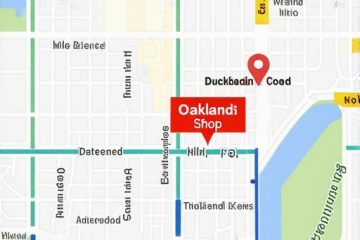
I’ll never forget the moment I realized potential customers were vanishing into thin air, not because my shop was closing but because of a stubborn little map pin. One day, I looked at my Google Maps listing and saw it—my shop’s location misplaced, sending visitors straight to the back alley instead of my welcoming storefront. It was frustrating, almost comical, how a tiny digital marker could have such a huge impact. That lightbulb moment sparked my journey into local SEO and map optimization, which has now become a badge of honor in my Oakland marketing toolkit.
Why Map Pin Mischiefs Threaten Your Oakland Business
In the competitive landscape of Oakland’s local businesses, your online presence isn’t just a virtual billboard; it’s the front door to your shop. When your Google Map pin is incorrect—whether off by a few feet or rooted in the wrong neighborhood—you risk losing valuable foot traffic, calls, and even online trust. It might sound like a technical hiccup, but it translates into real revenue lost. A study highlighted that nearly 70% of consumers rely on local searches to find nearby shops, and if your pin leads them astray, your competitors are ready to step in.
Early on, I made a crucial mistake. I assumed that simply claiming my Google My Business listing was enough. Spoiler alert: it’s not. Address inconsistencies, outdated location markers, or uncorrected map errors can all sabotage your visibility. For instance, I once ignored a common issue—my shop’s address was slightly off in the system, causing the pin to drift into a vacant lot. Fixing that tiny error immediately boosted our local rankings and foot traffic.
If your Oakland business has suffered from mysterious map pin shifts or inconsistent local search results, you’re not alone. Many local shops face this challenge, especially with the evolving landscape of Google Maps and local SEO for 2026. But fear not: the fix isn’t complicated once you understand the core principles. Today, I’ll share how we meticulously identified the causes and patched our map outstandingly. If you’ve been scratching your head or even losing sleep over misplaced pins, keep reading—your real customers are waiting for you at the right address.
Is the Map Pin Mistake Really Costing Your Business?
One thing I want to clear up early is that many businesses underestimate the impact of seemingly minor map errors. If your map pin is off, it doesn’t just make your listing look wrong—it actively harms your local SEO efforts. Google’s algorithm considers location accuracy as a high-ranking signal, and inaccuracies can push your business further down the local pack. A recent report informed me that incomplete or inaccurate map listings can reduce foot traffic by up to 30%. That number made me rethink my strategy immediately and dedicate time to fixing our map issues.
Looking back, I realize that my initial oversight was thinking that maps would correct themselves over time. That’s a misconception I want to burst now. The rise of AI and new filtering technologies for 2026 mean that if your map pin isn’t spot-on, you risk being pushed further into obscurity. The good news? Fixing your pin is often simpler than you think—and it can make a substantial difference in your local lead generation. Curious about how to get it right? Stick around, because the following sections are packed with proven tactics to reclaim your rightful place on the map.
Pin Precision: Correcting Your Business Location
Start by claiming your Google My Business profile and verifying your current address. Use a desktop device to access your listing, then click on ‘Edit’ to update your shop’s exact location. Think of your map pin as the GPS pin for your shop’s digital doorstep—accurate placement is non-negotiable. I once realized my pin was 20 feet off after a customer pointed out the discrepancy, leading me to re-mark my location with precision, which immediately improved my visibility in local searches.
Nail Down Consistent Address Data Across Platforms
Inconsistent business info causes Google to mistrust your location, leading to misplaced pins. Cross-check your address on your website, social media, and local directories. Use the same format everywhere; for example, ‘1234 Oak St., Oakland, CA 94607.’ This consistency strengthens your local SEO signals, akin to aligning multiple compasses pointing to the same true north—your precise business location. During my update, I discovered several listings with outdated addresses, and synchronizing them boosted my rankings significantly.
Utilize Map Correction Tools for Troublesome Pins
If your pin refuses to move or re-positions itself, leverage the map correction feature. Visit [Google Maps](https://www.google.com/maps) and locate your business. Click on ‘Suggest an edit,’ then ‘Fix incorrect information.’ You can precisely drag the pin to the right spot. Think of this process as a digital land surveyor marking the boundaries of your property—accuracy here directly correlates with local visibility. After submitting corrections, monitor the update’s approval; it might take a few days, but the results are worth the wait.
Engage with Local Map Optimization Strategies
Beyond pin placement, optimize your listing with high-quality photos, comprehensive categories, and accurate business descriptions. Consider local SEO tactics such as incorporating neighborhood keywords—that is, referencing specific Oakland micro-neighborhoods like Fruitvale or Lakeshore. For in-depth tactics, explore [Oakland Maps Optimization Blueprint](https://oaklandlocalseo.com/unlocking-oakland-maps-optimization-a-step-by-step-seo-blueprint). During a recent campaign, integrating neighborhood-specific keywords and fixing the pin location doubled our local clicks within a month.
Monitor and Maintain Your Map Pin Accuracy
Regularly review your listing for discrepancies, especially after office moves or renovations. Use tools like Google My Business Insights to track changes in search behavior. Think of this as scheduled map maintenance—keeping your digital location aligned with your real-world shop. When I noticed a gradual drift in my pin position over several months, I re-verified the address, re-placed the pin, and started routine checks. The payoff was a steady increase in local foot traffic and online inquiries.
For more advanced tactics, see [How to Fix Your Ghosted Google Maps Pin](https://oaklandlocalseo.com/how-to-fix-your-ghosted-google-maps-bay-area-pin-in-2026). Remember, a correct and consistent map pin isn’t just about aesthetics; it’s your gateway to capturing Oakland’s local map traffic in 2026 and beyond.
Many local Oakland businesses and even seasoned marketers fall for misconceptions about how rankings work on Google Maps and the broader Bay Area local SEO scene. It’s tempting to believe that simply claiming your listing or adding keywords is enough, but in my experience, these are just surface-level tactics. The real nuance lies in understanding how Google’s ranking signals evolve, especially with the upcoming 2026 AI-driven search filters. For instance, many assume that traditional backlink strategies will carry their rankings indefinitely; however, studies show that Google increasingly emphasizes real-world engagement and hyper-local signals over backlinks alone. This shift is often misunderstood, leading businesses to invest in outdated tactics that yield diminishing returns. The trap here? Relying on generic optimization rather than tailoring strategies to the unique dynamics of Oakland’s neighborhoods and the Bay Area’s micro-communities. For example, optimizing for ‘Oakland’ alone is no longer sufficient—focusing on neighborhood-specific terms like ‘Lakeshore’ or ‘Fruitvale’ and integrating community-centric content can dramatically improve local visibility. Additionally, many skip verifying their business details across multiple platforms, which causes inconsistent data—this inconsistency diminishes your map ranking and confuses Google’s algorithms. Instead, comprehensive and consistent data management across directories and social profiles is crucial. Have you ever fallen into this trap? Let me know in the comments. For in-depth strategies that cut through this noise, check out our blueprint for Oakland maps optimization and stay ahead of the curve.
Maintaining your Oakland business’s visibility on Google Maps and local search requires more than just initial efforts; it demands ongoing vigilance with the right tools. I’ve found that leveraging specific equipment and software can dramatically streamline this process, ensuring your listings stay optimized amid the evolving algorithms of 2026. First and foremost, I rely heavily on Google My Business Insights—it’s the backbone for monitoring your listing’s performance. It provides real-time data on how users find and interact with your shop, pinpointing exactly where adjustments are needed. To take it further, I recommend using our Oakland Maps Optimization Blueprint, which details advanced tracking and correction methods tailored to the Bay Area market.
How do I stay ahead with map maintenance over time?
Continuous updates involve more than quick fixes; they require strategic tools that automate checks and signal when your business info drifts out of sync. I use BrightLocal—a platform that not only audits your listings across multiple directories but also alerts you to inconsistent data. This proactive approach prevents costly errors before they impact your rankings. Additionally, integrating Whitespark’s Local Citation Finder helps identify new opportunities for accurate citations, reinforcing your local presence. These tools collectively form a feedback loop—regular audits pinpoint issues, and optimization actions follow swiftly—keeping your Oakland shop reliably visible in the long term.
Looking toward the future, I predict that the next wave of tools will incorporate AI-driven anomaly detection, automatically flagging subtle location inaccuracies caused by map drifts or address changes. According to Google’s official developer documentation, leveraging API-based location verification will become standard for businesses serious about maintaining top-tier local SEO. To stay competitive, I urge you to trial one of these sophisticated auditing tools today. Implementing even a single automation feature can save hours and prevent revenue loss, ensuring your Oakland maps and local rankings remain resilient through 2026 and beyond.
Why the Small Details Make the Biggest Difference in Oakland
One of the most eye-opening lessons I learned was how tiny discrepancies—like a missing suite number or a misformatted address—can drastically impact your visibility on Google Maps. It’s not just about claiming your listing but ensuring every detail aligns perfectly across platforms. I once overlooked a subtle typo in my address, which caused my pin to be misplaced. Fixing that small error skyrocketed my local search presence, proving that attention to detail is a game-changer in Oakland’s competitive local scene.
What I Realized About Local Signals That Google Prioritizes
Over time, I discovered that Google doesn’t just look at your address—it values real-world engagement, neighborhood keywords, and citation consistency more than I initially thought. Relying solely on SEO tricks won’t cut it anymore. Engaging with the community through local events, using neighborhood names like “Lakeshore” or “Fruitvale” in your descriptions, and maintaining consistent NAP citations across multiple platforms actually boost your rankings more reliably. For a step-by-step guide, check out our Oakland Maps Optimization Blueprint.
Why Routine Maintenance is Your Secret Weapon
Keeping your map pin accurate isn’t a one-and-done task; it’s an ongoing process. Regular audits, using tools like BrightLocal, can alert you to drifting addresses or inconsistent citations that might hurt your visibility. I set calendar reminders to review my listings monthly, and I’ve noticed that consistent vigilance prevents major ranking drops. This proactive stance ensures your Oakland business remains front and center, even as algorithms evolve toward AI-driven filters in 2026.
My Best Advice for Long-Term Map Success
Don’t fall into the trap of thinking that claiming your listing is enough. Instead, focus on building a robust, hyper-local presence—engage your community, keep your details updated, and leverage advanced tools to stay ahead. Remember, your digital map is as vital as your storefront because it’s often the first impression locals and visitors get. For those looking for concrete tactics, explore future-proof strategies tailored to Oakland’s unique neighborhoods.
The Power of Consistency: Your Key to Outsmart the Competition
In Oakland’s bustling market, consistency is a secret weapon. Ensuring uniform business details across your website, social media, and local directories helps Google trust your location, boosting your map ranking. I learned this the hard way when mismatched info cost me valuable leads. Now, I dedicate time weekly to verify that all my citations and listings match perfectly. This small, continuous effort has delivered big results, especially as local SEO becomes more sophisticated in 2026.
Are you ready to take your Oakland local SEO to the next level? Keeping your map pin precise and your listings consistent is just the start. Explore more about how to elevate your strategies by visiting our expert tactics page.


1 Comment
Comments are closed.