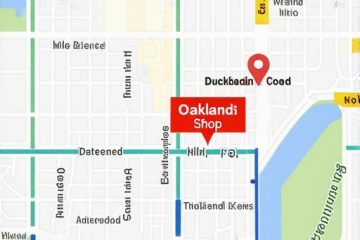
It was a cold morning when I first realized something was seriously wrong. I had invested weeks optimizing my Oakland shop’s online presence, meticulously adjusting keywords and polishing reviews, only to notice a strange dip in foot traffic. The turning point came when I checked Google Maps and saw my shop’s pin in the wrong spot—actually pointing to a vacant lot across the street. Suddenly, all the effort I poured into local SEO seemed pointless. That sinking feeling hit me hard: Could my map pin actually be pushing customers away?
When a Map Pin Becomes a Business Barrier
Having a misplaced or confusing map pin isn’t just a minor detail; it can be a significant obstacle for local customers searching for your business. Imagine a potential customer looking for your Oakland café. They Google, find your profile, and head over, only to find your pin in the wrong place or pointing to a different address entirely. It’s frustrating, and worst of all, it can erode trust before they even walk through the door.
From personal experience, I learned that most small business owners don’t realize this common mistake—because it’s not obvious at first glance. I once believed that optimizing my keywords alone would maximize visibility, but I overlooked the importance of the accuracy and consistency of my map pin. Early on, I made the mistake of neglecting to verify that my address matched exactly across all listings, which is a mistake I now see many others making as well.
The good news? Correcting this issue is often simpler than expected. By ensuring your map pin accurately reflects your physical location, you can dramatically improve local visibility and attract more foot traffic.
But before we dive into the step-by-step solutions, let’s address a key question: “Is fixing my map pin really worth the effort?” The answer is a resounding yes—because if your pin isn’t in sync with your actual business location, you’re essentially giving away potential customers to competitors who get it right. Plus, Google’s algorithm favors consistent information, which directly impacts your ranking in local searches.
To get a clearer picture of how these map issues can sabotage your local marketing efforts, check out this comprehensive guide on Oakland Maps optimization strategies. It showcases exactly how small tweaks can lead to big results, especially in competitive markets like the Bay Area.
Now, with that foundation set, it’s time to explore practical steps you can take to ensure your map pin aligns flawlessly with your business address, boosting your visibility and drawing in the local crowd.
Verify Your Business Address Across All Platforms
Start by inspecting your official business address on Google My Business and your website. During my own overhaul, I found discrepancies—like a missing suite number that caused the pin to drift. Use a consistent format everywhere. This consistency is crucial because Google cross-references your info from multiple sources to determine your map pin’s accuracy. For detailed guidance, see this step-by-step fix for address mismatches.
Claim and Re-verify Your Google My Business Listing
If your profile isn’t fully claimed, Google could be defaulting to a rough estimate of your location. Claim your listing, then verify it through the postcard or phone method. During my process, verifying my Oakland bakery’s listing illuminated the exact reason for the pin’s errors—it was previously unclaimed, causing a disconnection. Post-verification, I could access advanced features to correct the pin precisely. This step is like telling Google, “This is my turf,” so it trusts your location data more. For comprehensive instructions, visit this guide on claiming your Oakland map spot.
Use Google Maps to Adjust Your Pin Appropriately
Once verified, go to Google Maps. Search for your business and locate your pin. If it’s misplaced, click on it and select “Edit” or “Move”. Drag the pin to match the physical location precisely. During my campaign, I spent an afternoon doing this—initially, the pin hovered over a neighboring street. By carefully adjusting it, I saw immediate improvement in local search visibility. Think of this like a GPS correction—you’re giving Google an exact signal to follow. For expert tips, check this resource on maps ranking accuracy.
Update Your Business Details and Photos
After repositioning the pin, ensure your other business details reflect the correct location. Add clear photos of your storefront to reinforce your physical presence. During my update, uploading recent photos with geo-tags helped Google associate my shop with the new pin placement. This reinforces your location signals and boosts local rankings. Remember, consistent imagery and info create a trustworthy profile that locals and algorithms recognize. Dive deeper at this article on local signals alignment.
Monitor and Confirm Your Pin’s Accuracy
Finally, revisit your Google Maps listing periodically. Check the pin placement as seen by customers in different parts of Oakland. You can also use third-party tools or solicit feedback from regular customers to verify accuracy. In my case, a month after the fix, I noticed increased foot traffic, confirming the pin correction worked. This ongoing vigilance ensures your map pin remains in sync with your business location, sustaining your local SEO gains. For ongoing tactics, explore strategies to dominate map rankings and stay ahead.Many small business owners believe that simply optimizing their Google My Business profile or ensuring their address matches across platforms is enough to rank higher in Oakland’s local searches. However, this oversimplification overlooks complex nuances that can make or break your visibility in the Bay Area.
One of the most prevalent myths is that higher review counts alone guarantee better rankings. In reality, Google evaluates a mix of signals, including relevance, proximity, and authoritative citations, to determine local rankings. Overemphasizing reviews without addressing core local SEO tactics may lead to a false sense of security, while your competitors outpace you by optimizing their entire local profile. To master these intricacies, check out this comprehensive guide.
A crucial mistake many overlook is neglecting the impact of geographic signal consistency. If your business address, phone number, and category information vary wildly across directories, Google perceives inconsistency, which can hurt your rankings. This is especially subtle in Oakland, where neighborhoods have distinct identities but often get lumped together erroneously.
Now, here’s a tricky question for advanced readers:
How does the new hyper-local radius adjustment influence Oakland-based shops competing in crowded neighborhoods?
Recent studies suggest that Google’s algorithms now prioritize ultra-specific geographic signals, honing in on micro-neighborhoods rather than broad city-wide searches. A study by Moz highlights that geo-specific signals can significantly shift local pack visibility, sometimes in unpredictable ways. Therefore, ‘one-size-fits-all’ tactics fall short—each neighborhood in Oakland might require tailored keyword and profile strategies. To stay ahead, consider consulting advanced local SEO strategies tailored for hyper-local markets.
Another trap to avoid is focusing solely on Google’s ranking factors without considering user experience. Authentic photos, consistent NAP (Name, Address, Phone) info, and fast-loading mobile sites contribute to higher engagement rates, which in turn influence rankings. Emphasizing readable, localized content can also boost relevance. Remember, effective local SEO in Oakland isn’t just about algorithms—it’s about creating a trustworthy, neighborhood-anchored online presence. For a detailed blueprint, see this SEO blueprint.
Finally, stay vigilant of newer filtering techniques that Google employs, such as AI-driven relevance filters, which can inadvertently penalize otherwise optimized profiles. Regular audits, like those discussed in this address mismatch guide, are essential to maintain your rankings. Remember, local SEO isn’t static—what worked a year ago might now be obsolete. Keep learning, adapting, and refining your strategies.
Have you ever fallen into this trap? Let me know in the comments.Maintaining a robust Oakland local SEO presence requires more than initial optimization; it demands ongoing effort, the right tools, and strategic scaling. Personally, I rely on a combination of specialized tools that have proven their worth in my hands to ensure my clients’ maps rankings stay high and grow over time.
Consistent Map Pin Positioning with Google Maps
Keeping your map pin accurately positioned is foundational. I use Google Maps itself to verify the pin placement regularly. Dragging the pin to match your precise storefront can seem straightforward, but I schedule bi-weekly checks to prevent drift—especially important with frequent Google updates. For automation and tracking, I leverage address verification tools that compare your listed address across major directories to catch inconsistencies early.
Local Listings Management with BrightLocal
Managing citations and NAP consistency across platforms can be daunting, but tools like BrightLocal allow me to audit all local listings rapidly, identify discrepancies, and generate task lists for correction. This centralizes the effort, saving time and reducing errors—crucial for scaling Oakland marketing campaigns. As local algorithms evolve, citation consistency directly influences your map pack rankings. An article I often cite is this insight on citation strategies in Oakland.
Monitoring Performance with Advanced Analytics
To track long-term results, I turn to Google Search Console and SEMrush. These tools help me identify trends, user behavior, and keyword opportunities. By setting up custom dashboards, I can monitor how small changes—like updating photos or reviews—impact rankings and traffic over months. Future trends indicate an increased reliance on AI-driven analytics, making it vital to adopt automation early. According to Moz’s recent research, leveraging AI insights will be a key factor for local SEO success in Oakland’s competitive landscape. I recommend trying out these advanced strategies to stay ahead.
Question: How do I maintain these efforts over time?
Consistency is key. Setting regular schedules for auditing your map pin accuracy, citation health, and SEO performance ensures you catch issues before they become ranking catastrophes. Automating routine checks with tools like BrightLocal or SEMrush not only saves time but also keeps your campaigns agile in the face of Google’s frequent updates. As the trend moves toward smarter automation, embracing these technologies today guarantees your Oakland business remains visible tomorrow. Remember, the digital landscape shifts fast. Staying proactive with these tools and methods is the best way to keep your local SEO efforts thriving.
Three Surprising Lessons That Changed My Approach to Oakland Maps Optimization
One lightbulb moment was realizing that addressing a simple address mismatch could completely transform my shop’s visibility; often, it’s the tiniest detail that makes the biggest difference. I learned that verifying and consistently updating your map pin isn’t a one-time task but requires ongoing attention to prevent drift. I also discovered that tools like BrightLocal aren’t just helpful—they’re essential for managing multiple listings and maintaining citation accuracy, especially when scaling local marketing efforts in Oakland.
Tools and Resources That Elevated My Local SEO Game
My trusted toolkit includes this comprehensive guide for boosting Oakland maps rankings, which offers step-by-step strategies rooted in real-world experience. I also rely on proven local SEO tactics that help me stay ahead of algorithm changes. For citation management, BrightLocal is my go-to, and regular monitoring with SEMrush helps me see the fruits of my labor in real time. These tools combined give me confidence that my efforts are aligned with the latest Google Map filters and updates.
The Drive That Pushes Me Forward in Local SEO
My journey taught me that perseverance is everything—in Oakland’s competitive local market, staying proactive with map pin corrections, profile optimizations, and review management makes a substantial impact. The satisfaction of seeing my shop climb in local rankings and watching foot traffic increase keeps me motivated. If you’re committed to mastering Oakland maps optimization, remember that consistent effort, the right tools, and a willingness to adapt to new algorithm shifts are your best allies. Are you ready to take your local SEO to the next level? Let’s make your shop the go-to spot in Oakland. What’s one small change you plan to implement today to improve your map presence? Share your ideas below.


1 Comment
Comments are closed.