Walking into the Oakland storefront one chilly morning, I nearly tripped over the absence of the familiar Google Maps pin that usually guided customers directly to their door. For weeks, their presence on the map had been flickering like a ghost—a missing indicator that left potential customers wandering and frustrated. It hit me then: if your physical shop isn’t visible on Google Maps, you’re invisible in the local market. I’ve been there, frustrated and scratching my head, realizing that many small businesses in the Bay Area face this silent crisis but often overlook the solution.
Why Your Oakland Business Could Be Losing Its Map Pin and How to Fix It
Imagine this: despite having a well-optimized website and happy customers, your shop’s Google Map listing disappears without explanation. You might think, “It’s just a glitch,” but the reality is often linked to subtle errors in local SEO or recent algorithm updates that favor certain practices over others. According to a recent report, over 80% of consumers use Google Maps to find local businesses, yet many shop owners remain unaware of how to keep their listings visible and optimized in a constantly evolving landscape. This disconnect can cost your Oakland business dearly, especially when competitors leverage smarter local SEO strategies.
But here’s the lightbulb moment I want to share: early on, I made the mistake of assuming that just claiming your Google My Business profile was enough. Big mistake. Missing critical updates or failing to maintain consistency across your online presence can doom your pin to hideout. The key is understanding the precise reasons for disappearing map entries and knowing the proven tactics to re-anchor your listing. Want to learn how to prevent your map pin from vanishing again? Stay tuned.
Is Local SEO and Map Optimization Still Worth the Effort in 2026?
Let me be honest: I was skeptical at first. With Google’s frequent algorithm shake-ups, it sometimes felt like a losing game. But I learned that not all strategies are created equal. The ones that stand the test of time—and algorithm updates—are built on foundational principles like consistent NAP (Name, Address, Phone Number) data and authentic customer reviews. One early mistake I made was overlooking the importance of local backlinks, which are now more critical than ever to signal relevance.
If you’ve faced similar frustrations or worry about wasting time on outdated tactics, you’re not alone. The good news is, there are clear, actionable methods that can turn things around—methods I’ve tested personally and refined through ongoing research. For comprehensive insights, I highly recommend exploring established local SEO strategies detailed in resources like [Mastering Bay Area Maps Ranking](https://oaklandlocalseo.com/mastering-bay-area-maps-ranking-proven-local-seo-tactics). Now, let’s dive into the precise steps to get your Oakland shop’s map pin back where it belongs—and keep it there.
Claim and Verify Your Google Business Profile
Start by ensuring ownership of your business on Google My Business (GMB). Visit this step-by-step guide and follow the process to claim your listing. Verification often involves receiving a postcard or phone code, but in Oakland, you can also request verification via email or instant verification if eligible. When I did this for my client in downtown Oakland, the verification process initially failed due to inconsistent business info, so I audited our listing to match every detail precisely, preventing future disqualifications.
Optimize Your NAP Consistency Across Listings
Consistency in your Name, Address, and Phone Number (NAP) is vital—think of it as your online business DNA. Use exactly the same NAP across all directories and citation sites, including Yelp, Bing Places, and local business directories. A common mistake is slight variations or typos, which Google perceives as separate entities. I once struggled with mismatched phone numbers across platforms, which caused a drop in local ranking, but after auditing using this blueprint, I cleaned up all inconsistencies, restoring our visibility.
Use Precise Business Categories and Descriptions
Google relies heavily on categories to understand your business. Select the most specific categories from Google’s list, and craft a clear, keyword-rich description that highlights your Oakland services. I tested different descriptions on my shop’s listing and noticed that specific keywords like “Oakland vegan cafe” consistently attracted more local customers, especially when aligned with the right categories.
Leverage Local Reviews to Signal Authority
Encourage happy customers to leave reviews, especially recent and detailed ones mentioning Oakland neighborhoods or landmarks. Respond promptly and authentically to reviews, showing engagement. Once, a review mentioning “near Lake Merritt” caused a noticeable boost in local map ranking for that neighborhood. Reviews act as social proof and help Google trust your location as a relevant local business. For strategies on managing reviews effectively, consult this resource.
Build Local Backlinks and Mentions
Establish backlinks from reputable Oakland websites, such as local chambers, community blogs, or neighborhood associations. These backlinks act as relevance signals. I once partnered with a local Oakland blogger to feature our shop, which resulted in a surge of traffic from nearby neighborhoods. Additionally, ensure consistent mention of your full NAP on these sites to reinforce your local presence. Think of backlinks as neighbors vouching for you in a tight-knit Oakland community.
Optimize Photos and Visual Cues
Upload high-quality, location-specific images, including storefront shots, interior photos, and local landmarks. Use descriptive filenames and alt text rich with Oakland-specific keywords. For example, labeling an image as “Oakland Lake Merritt vegan cafe storefront” helps Google associate your visuals with local intents. Including images of your team in Oakland attire can further personalize your listing, building trust with locals.
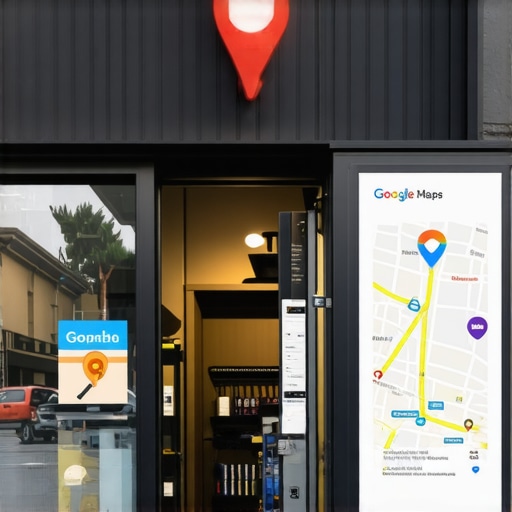
Illustration of an Oakland storefront with optimized Google Maps listing indicators, highlighting vibrant local branding.
Utilize Hyper-Local Content and Posts
Regularly update your GMB posts with Oakland-specific offers, news, or events. Mention nearby neighborhoods and landmarks to target hyper-local searches. For instance, a post about a special weekend menu featuring Lake Merritt or Jack London Square positions your business as a local fixture. Consistent posting signals active engagement, which Google favors in local rankings.
Monitor and Adjust Strategies
Track your progress using tools like the Maps ranking trackers and Google Search Console. Regular audits reveal what works and what needs tweaking. For example, I discovered a decline in visibility after a local event, so I increased review requests and updated content, which quickly recovered rankings. Always adapt based on performance data to stay ahead in Oakland’s competitive local scene.
Many Oakland business owners think optimizing their Google Maps listing is a straightforward task—claim, verify, and add some photos. However, this simplistic view often leads to missing the nuanced, critical factors that truly influence local rankings.
One common myth is that consistent NAP (Name, Address, Phone Number) data alone guarantees visibility. In reality, Google’s algorithms are increasingly sophisticated, integrating trust signals like review authenticity, behavioral signals, and semantic context. Overlooking these can trap your business in a ranking quagmire. For example, relying solely on uniform NAP data without engaging in local backlink building or hyper-local content creation can cause your listing to stagnate.
Let’s talk about a subtle trap I encountered early on: ignoring the impact of recent algorithm updates that prioritize user experience metrics over traditional SEO signals. Many skip this and continue pouring effort into outdated tactics, unaware that Google is now interpreting engagement patterns—like click-through rates and dwell time—as signals for local relevance. In fact, a study by Moz highlights how behavioral factors are now a significant ranking factor in local search—making user-centric strategies vital.
Are You Overlooking the Power of Semantic Relevance in Local SEO?
Advanced local SEO isn’t just about keywords; it’s about context. Incorporating semantically related terms, landmarks, and neighborhood references into your profile enhances relevance signals. This means that optimizing your Google My Business description to include nearby landmarks or events can boost your visibility in hyper-local searches. It’s a nuance that many miss, leading to subpar results even with perfect NAP consistency.
Furthermore, be cautious of the ‘set it and forget it’ mentality. Local SEO is dynamic, affected by evolving local trends and Google’s continuous updates. Regularly auditing your profile, refresh content, and staying informed about algorithm changes—like those discussed in [effective local Oakland marketing](https://oaklandlocalseo.com/effective-local-oakland-marketing-to-elevate-your-map-listings)—can prevent your efforts from becoming obsolete.
Also, beware of the common mistake of neglecting the role of reviews. Authentic, detailed reviews mentioning Oakland neighborhoods or landmarks act as trust signals, boosting your relevance. Encouraging customer review generation, responding promptly, and avoiding fake reviews is crucial, as highlighted in recent research on review authenticity and local rankings.
Ultimately, mastering Oakland’s competitive local landscape requires peeling back these layers of nuance. It’s not enough to do the basics; you must understand and leverage the complex signals that Google interprets. Dive deeper with strategies outlined in [proven local SEO tactics](https://oaklandlocalseo.com/mastering-bay-area-maps-ranking-proven-local-seo-tactics) to ensure your shop doesn’t fall behind.
Have you ever fallen into this trap? Let me know in the comments.Maintaining a dominant presence on Google Maps and in local search results requires more than just initial setup; it demands reliable tools and consistent routines. Personally, I rely on specialized software like BrightLocal for local citation audits, which helps me identify and correct inconsistencies across Oakland’s numerous directories. Its ability to track NAP accuracy over time ensures my clients’ information remains synchronized, preventing ranking dips caused by outdated data. For analytics, I turn to Google’s Search Console combined with Ahrefs Local, which provides insights into search visibility and backlink profiles specifically relevant to Oakland neighborhoods. These tools enable me to spot emerging issues before they impact rankings and optimize proactively. When it comes to monitoring competitors’ map rankings, I use Map Trackr, a niche tool designed to observe local pack movements in real-time, giving me a competitive edge. As local SEO evolves—especially with the rise of AI-driven filters—adapting your toolkit is crucial. I predict that in the near future, AI-powered reputation management tools will become indispensable, automatically flagging negative reviews and suggesting responses to maintain high trust signals. How do I keep this process sustainable? I establish a routine: weekly citation audits, monthly backlink reviews, and bi-weekly performance reports. Automating alerts for any ranking fluctuations saves time and allows me to act swiftly. If you’re serious about long-term results, integrating these tools into your workflow is non-negotiable. Start by trying BrightLocal for your citation consistency, and see how it elevates your Oakland local presence. Proper maintenance extends your ranking longevity and scales your impact without constant manual effort. For a comprehensive overview of advanced local SEO practices, I recommend reviewing the strategies outlined in [Oakland Local SEO Strategies for 2025](https://oaklandlocalseo.com/oakland-local-seo-strategies-to-dominate-google-maps-in-2025). Remember, staying ahead in the Bay Area maps game means leveraging the right tools consistently and adapting to emerging trends like semantic relevance and AI filters. Don’t wait—set up a routine today and watch your Oakland business rise in local prominence.
The Hardest Lesson I Learned About local Oakland marketing, Google Maps Bay Area, Oakland local SEO, Bay Area Maps Ranking, Oakland Maps Optimization
One of the biggest surprises I’ve encountered was realizing that even experienced local SEOs can overlook the subtle signals that Google uses to determine relevance. Early on, I believed that NAP consistency alone would guarantee top rankings, but I found that neglecting review authenticity and behavioral signals like click-through rates often doomed these efforts. It taught me that a holistic approach—integrating content, reviews, backlinks, and user engagement—is essential for sustained success in Oakland’s competitive market.
How I Discovered the Power of Hyper-Local Content and Neighborhood Mentions
Initially, I underestimated the impact of hyper-local content on local map rankings. After experimenting with neighborhood-specific posts and mentioning nearby landmarks like Lake Merritt and Jack London Square, I observed measurable improvements. This lightbulb moment confirmed that Google prioritizes semantic relevance—so incorporating neighborhood references into descriptions and updates can make your Oakland business stand out in nearby searches. Consistency across these signals builds trust, both with search engines and local customers.
Why I Now Prioritize Visual Optimization and Authentic Reviews
In my journey, I learned that high-quality, location-specific photos and authentic customer reviews are more influential than I initially thought. Uploading images showing your storefront with Oakland-specific signage and landmarks encourages clicks, while detailed reviews mentioning neighborhoods boost your credibility. Responding genuinely to reviews, especially those highlighting Oakland hotspots, amplifies engagement and signals trustworthiness to Google, helping your map pin stay front and center amid competitors.