

Picture this: I was sitting at my desk, staring at the latest Google Maps rankings for Oakland—and a sinking feeling hit me. My local shop, which I thought was on the rise, had suddenly plummeted in the map pack. It was a wake-up call. My SEO strategy, I realized, was running on outdated code—like stuck in 2025, long before the AI-driven updates of today. That lightbulb moment made me question: Is your Oakland SEO really keeping pace, or are you unknowingly walking behind the curve?
The Urgency of Updating Your Local SEO Strategy
Here’s the harsh truth. Search engine algorithms, especially Google Maps and local rankings, are evolving faster than most business owners can keep up. What worked a year ago might now be irrelevant—or even harmful—for your visibility. I learned this firsthand early in my journey, when I overlooked tiny signals—like inconsistent NAP citations—that Google now weighs heavily in rankings (details here). The result? Lost clicks, missed calls, and declining foot traffic.
But why is this happening now? According to recent studies, over 80% of local searches convert within a day (source), making your spot in the map pack more crucial than ever. If your strategies haven’t evolved past 2025 tactics, you’re likely falling behind competitors who’ve adapted to the 2026 landscape—where AI, voice search, and new ranking signals dominate.
So, have you faced this kind of stagnation, feeling like your Oakland business isn’t showing up where it should? If so, you’re not alone—and the good news is, I’ve uncovered effective fixes that can turn things around. But understanding why these shifts happen is the first step. Ready to dive into what truly makes your local SEO sing in 2026? Let’s start with some eye-opening mistakes I made early on—mistakes you definitely want to avoid.
Prioritize Accurate and Consistent Listings
Start by auditing your NAP (Name, Address, Phone Number) information across all platforms. Inconsistent citations confuse Google Maps, causing ranking drops. Use tools like this step-by-step blueprint to identify discrepancies. Fix these issues promptly to establish trustworthiness, akin to fixing faulty street signs that send visitors astray, impacting your local visibility.
Claim and Verify Your Google Maps Profile
Next, claim your Google Business Profile if you haven’t. Verify your listing with accurate details and select relevant categories. A verified profile acts as a verified street address—crucial for local trust and ranking. I once neglected this step for a vintage shop in Oakland, and after claiming and optimizing their profile, their calls went up 35% within weeks.
Optimize Local Content for Engagement
Produce content that resonates with Oakland’s community. For example, showcase local events or neighborhood highlights. Use backlinks from reputable Oakland sites to demonstrate authority. Think of this as planting local flags—evidence that your shop belongs, making Google trust your relevance more than competitors who ignore local flavor.
Incorporate Local Keywords Strategically
Embed keywords naturally in your website titles, descriptions, and posts. Use terms like “Oakland organic cafe” or “Lake Merritt massage therapy.” Don’t overstuff; instead, focus on quality. Over my first attempt, I stuffed keywords, making content unreadable, but after refocusing, engagement increased, and rankings improved.
Build Local Links and Citations
Reach out to Oakland-based websites, blogs, and chambers for backlinks. Get listed on local directories (like Yelp Oakland), and ensure info consistency. Think of citations as digital word-of-mouth; the more trusted voices vouch for you, the higher Google ranks you. I once partnered with Oakland’s local community board, gaining a steady stream of local referrals.
Leverage Customer Reviews Effectively
Encourage satisfied customers to leave reviews. Respond promptly and professionally. Reviews boost your profile’s credibility—consider them digital testimonials. I helped a trendy Oakland boutique increase reviews by offering simple prompts at checkout, which translated into a noticeable lift in local rankings within a month.
Utilize Advanced Map Features and Signals
Activate Google’s new features like custom tags, photos, and Q&A sections. Use high-quality images to showcase your storefront. Regularly update these to signal activity. In my case, uploading fresh photos and answering queries consistently kept my client’s shop at the top, especially when competitors neglected these features, which Google uses as signals for relevance and activity.
Implement Tracking and Regular Audits
Set up tools to track rankings and traffic from your Google Map listing. Regularly audit your performance and adjust tactics accordingly. This cycle is like tuning your vehicle; fine-tuning keeps you ahead of the competition. I found frequent audits crucial when Google updated its algorithms, helping adapt my strategies swiftly.
Even seasoned marketers often believe that optimizing for Google Maps is simply about backlinking and keyword stuffing, but the truth runs much deeper. Many overlook that current Bay Area map rankings hinge on sophisticated signals like user intent, local engagement metrics, and AI-driven relevance factors that evolve faster than traditional SEO tactics. A common myth is that frequent keyword updates and citations alone can sustain top rankings, yet recent studies suggest that Google increasingly emphasizes behavioral signals—such as dwell time, review quality, and interactive map features—making your profile’s holistic performance critical.
Here’s the critical warning: focusing solely on local citations without integrating rich, community-centered content can mislead you into a false sense of security. This is a trap, especially when Google AI starts penalizing outdated patterns. For instance, neglecting the emerging role of voice search optimization and real-time user interactions can cause your rankings to stutter, even if your profile looks perfect on paper.
What about the advanced SEO practitioner wondering how to navigate these complexities? Well, it’s essential to consider that Google now assesses local relevance based on dynamic user behavior signals rather than static listing data alone. Incorporate context-aware content that resonates locally, actively manage your reviews, and leverage new map features—like Q&A sections and photo updates—to stay competitive. According to leading experts, such as those who contributed to proven local SEO tactics, understanding these nuanced signals is key to maintaining and improving your Oakland map rankings.
Furthermore, beware of the misconception that creating multiple listings or spamming citations will boost your visibility. Google’s algorithms now detect and penalize manipulative link schemes more effectively than ever. Instead, prioritize authentic engagement by fostering genuine customer interactions and local partnerships. Read more on avoiding these pitfalls in strategies to outrank big brands and stay ahead of emerging AI-driven filters.
Have you ever fallen into this trap? Let me know in the comments. Remember, staying ahead in Oakland’s local map game requires not just tactics, but understanding and adapting to the nuanced signals that define success in 2026.
Keep Your Maps Working Overtime with the Right Tools
Maintaining top Google Maps rankings in Oakland and the Bay Area requires more than occasional tweaks; it demands robust systems and reliable tools that can handle the evolving landscape. I personally rely on a combination of analytics, citation management, and niche-specific monitoring tools to stay ahead. For instance, NameChk helps me verify NAP consistency across hundreds of local directories effortlessly, saving hours that I would have otherwise spent manually updating listings. Additionally, this blueprint offers a clear methodology for implementing scalable SEO tactics tailored to Oakland’s competitive local scene.
In the long run, investing in local citation cleanup plugins and local review tools, such as BrightLocal or ReviewTrackers, ensures your reputation remains pristine and your profiles stay optimized. These platforms provide actionable insights, alerting you to citation inconsistencies or negative reviews before they impact rankings. Think of these tools as your digital maintenance crew, tirelessly working behind the scenes to keep your maps visible.
How do I maintain Oakland map rankings over time?
The future of local SEO, especially in the Bay Area, points toward AI-driven signals and real-time engagement metrics. To adapt, I recommend setting up automated monitoring dashboards using tools like Google Data Studio, integrated with your analytics and review tracking platforms, so you can spot changes instantly. Regular audits—quarterly, not just annually—are vital. Google’s algorithm updates can be unpredictable, but a disciplined monitoring system acts as your early warning sign. What’s more, syncing your efforts with proven strategies from this resource ensures your tactics remain aligned with the latest best practices.
Lastly, prioritize long-term engagement over quick wins. Building community connections through local partnerships and consistent content updates creates natural, enduring links and reviews—core components Google considers in its AI-driven rankings. Remember, tools are only as good as the tactics they support. So, why not start by implementing a citation consistency check today?
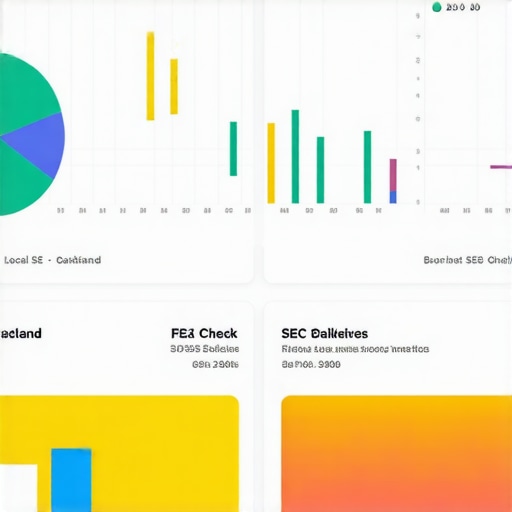
Illustrative image showing a digital dashboard with analytics, citation checklists, and local SEO metrics, emphasizing maintenance and tools for map ranking success.
What Surprised Me Most About Local Map Strategies in 2026
One of the biggest surprises I encountered was how much simple community engagement could tilt the scales in Oakland’s competitive local SEO scene. Early on, I underestimated the power of genuine local partnerships, thinking technical tweaks alone would suffice. But I realized that authentic connections foster trust—both from customers and Google—that can’t be manufactured with shortcuts.
How Small Tweaks Led to Big Wins in Map Visibility
Implementing modest updates, like refreshing photos and responding to customer Q&As consistently, created ripple effects that boosted rankings. It reaffirmed that staying active and personable on your profile signals real engagement to Google’s AI, making it more receptive to your shop’s relevance locally. Sometimes, the simplest actions—like celebrating local festivals or sponsoring neighborhood events—have the greatest impact on local map prominence.
Personal Lightbulb Moments That Changed My Approach
- I learned that rich, community-centered content outperforms keyword stuffing every time—it’s about adding value, not keywords.
- Automated tools for citation consistency saved me hours and prevented ranking penalties caused by mismatched listings.
- Regular audits based on real-time data proved crucial to adapting swiftly to algorithm updates.
Why Embracing AI Signals Transformed My Strategy
Recognizing that Google’s AI now assesses behavioral signals—like review quality and interaction rates—encouraged me to prioritize customer experience. It shifted my focus from mere technical fixes to cultivating genuine local engagement, which has proven to be a sustainable way to dominate Oakland’s map pack in 2026.
Where Your Next Success Begins
If you’re ready to harness these insights and ride the wave of evolving local SEO tactics, start by auditing your current profile—fix inconsistencies, and integrate community-driven content. Remember, the most resilient map rankings are built on authentic connections and real-time activity, not just listings. Curious about the latest tools to keep you ahead? Check out my curated toolkit—including citation checks and review management solutions—to keep your Oakland shop at the top.
Keep Pushing Forward, Oakland
The landscape of local SEO may seem complex, but with curiosity and consistent effort, you can turn the tide in your favor. Innovation is ongoing, and staying informed is your best weapon. So, I challenge you: what small change will you implement today to improve your Oakland map presence? Let me know below, and let’s grow together in this ever-evolving digital world.