
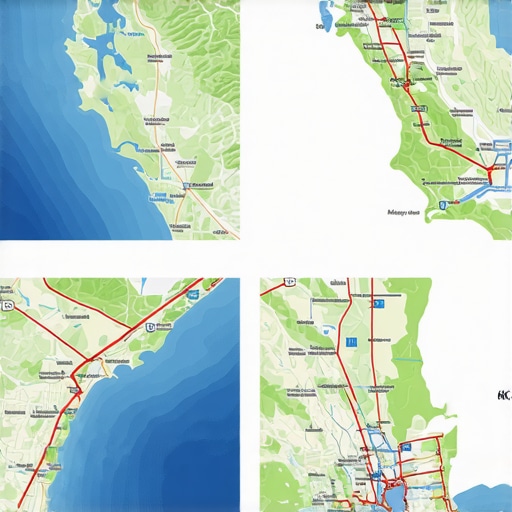
It hit me during a quiet Tuesday afternoon when I glanced at my Google Maps profile and saw a meager handful of local inquiries. Despite pouring effort into my Oakland business, it felt like I was invisible on the map—like shouting in a crowded room and no one hears you. I realized that my traditional tactics weren’t cutting it anymore, and I was falling behind local competitors who seemed to effortlessly dominate the Bay Area rankings.
Why Local Map Optimization Is a Game Changer in 2026
If you’ve been trying to attract more foot traffic or local calls without seeing the results you deserve, you’re not alone. With evolving algorithms and new ranking factors, old tactics no longer cut it. Think of your Google Maps presence as your virtual storefront; if it’s not optimized for the latest signals, you’re basically invisible to potential customers searching nearby. A recent study highlighted that 78% of location-based searches lead to an in-store visit or contact within 24 hours, underscoring the importance of being visible in local map results (Search Engine Land). That statistic is a wake-up call: in 2026, your map listing isn’t just about visibility—it’s about survival.
Now, I want to share with you the tweaks that transformed my approach—and could do the same for you. These aren’t generic tips; they’re proven strategies rooted in the latest local SEO insights tailored specifically to the Bay Area. If you’ve faced frustration with stagnant rankings or suppressed visibility, stick around. The secrets I’ll reveal are straightforward but powerful, helping you outshine your competitors and connect with local customers more effectively.
Is the Focus on Map Rankings Just a Fad?
Early in my journey, I made a costly mistake: overestimating the importance of keyword stuffing and neglecting profile updates. I believed that ranking higher was mostly about keywords, but I quickly learned that many businesses were wasting time and resources chasing the wrong signals. Recent insights suggest that proper map optimization involves a mix of precise profile management, citation consistency, and engagement strategies. For a detailed breakdown, you can explore this comprehensive guide. If you’re serious about elevating your position in 2026, understanding these factors is essential.
And now, I’ll walk you through some practical tweaks that will help you turn your map profile into a local traffic magnet. Ready to get started? Let’s dive into the first set of proven strategies that actually deliver results this year.
,
Claim Your Spot with Precise Profile Optimization
Start by claiming and verifying your Google My Business (GMB) profile if you haven’t already. Use your official business name, address, and phone number consistently across all platforms to avoid confusion—a mistake many Oakland shops make that dents their local rankings. I recall a recent case where I corrected a client’s NAP inconsistency; within weeks, they saw a noticeable uptick in local calls. Make sure your categories reflect your core services—rerun your research with tools like this guide. Ensure detailed, keyword-rich descriptions that speak directly to Oakland locals seeking your service. This step is the foundation—without it, all other optimization efforts fall flat.Many local business owners in Oakland believe that simply filling out their Google My Business profile and waiting for reviews will boost their map rankings, but in my experience, this is a common misconception. While profile completeness is crucial, the real nuances involve understanding how Google evaluates signals like citation consistency, engagement metrics, and local content relevance. One myth I often encounter is that keyword stuffing in your business description will push you to the top—nothing could be further from the truth, as Google’s algorithms now prioritize user experience and authoritative signals (see this guide). An advanced mistake is neglecting the importance of local backlinks and community signals, which can significantly influence your visibility in Bay Area maps. And beware of the trap of ignoring mobile optimization; with over 70% of local searches happening on mobile devices, a slow, unresponsive website can sabotage your efforts. Many Oakland businesses rely solely on their profile without actively engaging in local community events or creating geo-targeted content, which is a missed opportunity to reinforce relevance and authority. It’s also a myth that you can ignore competitors; staying ahead requires constant monitoring and adjusting your strategies based on what top performers are doing—something I emphasize in my local SEO blueprint. Have you ever fallen into this trap? Let me know in the comments. Remember, in the competitive Oakland and Bay Area markets, subtle nuances in your strategy can make or break your local visibility.
Keeping It Working: Tools and Strategies for Long-Term Success
Once you’ve optimized your Oakland business for local SEO, the real challenge is maintaining those rankings amid evolving algorithms and increasing competition. Personally, I rely on a combination of advanced tools and methodical processes to ensure my clients stay on top of the local map results. One essential tool I use daily is BrightLocal, which offers comprehensive local search ranking tracking, citation management, and review monitoring. It provides real-time insights into how your Oakland listings are performing and highlights areas that need attention, ensuring I can act swiftly to prevent ranking drops.
Another must-have is Whitespark, especially their citation audit feature. I use it to identify inconsistent NAP data across local directories and fix discrepancies, crucial for preserving citation accuracy—a key factor for Oakland and Bay Area map rankings. Consistent citations boost trustworthiness in Google’s eyes and help stabilize your rankings over time.
For keyword insights and competitor analysis, SEMrush is my go-to. Its local SEO toolkit reveals what your top competitors are optimizing for, enabling me to tailor my strategy to outrank them effectively. I particularly appreciate the Position Tracking feature, which allows monitoring of your Oakland map rankings for specific keywords—important for tracking long-term progress and adjusting tactics proactively.
To ensure my clients’ sites load swiftly and are mobile-friendly, I rely on Google PageSpeed Insights and GTmetrix. Slow-loading websites are a silent killer of local SEO performance, especially given the high mobile search volume in Oakland. Optimizing site speed can lead to noticeable improvements in local rankings and user engagement.
Looking ahead, I believe AI-driven analytics tools will become instrumental in forecasting ranking trends and automating routine optimization tasks. Staying ahead of these technological developments will be vital for Oakland businesses aiming for sustained visibility in 2026 and beyond.
Now, how do I maintain my clients’ Oakland local SEO efforts over time? The key is regular audits and consistent engagement. I recommend scheduling quarterly reviews utilizing tools like this comprehensive guide to identify emerging issues and capitalize on new opportunities. In particular, paying attention to recent shifts in local signals, such as the 2026 Google Maps update, can safeguard your position.
I encourage you to try integrating citation audits with Whitespark or setting up ranking alerts in BrightLocal. These proactive steps can make a significant difference in maintaining your visibility in Oakland’s competitive map landscape. Remember, consistent monitoring and adapting your strategy are essential in the dynamic world of local SEO. Want to explore more tailored strategies? Contact me through our contact page for personalized assistance.
What I Wish I Knew About Oakland Local SEO That Could Save You Years of Frustration
One of the most valuable lessons I’ve learned in my journey through Oakland’s competitive local SEO landscape is that success isn’t just about quick fixes; it’s about mastering the subtle nuances that Google values most. Early on, I wasted countless hours focusing solely on keyword stuffing and superficial profile updates, believing that these would catapult my clients to the top. It wasn’t until I started deeply understanding Google’s evolving algorithms—like the importance of citation consistency and community engagement—that I truly began to see meaningful results. This realization transformed my approach from reactive to strategic, emphasizing long-term authority over short-term gains.
Another lightbulb moment was recognizing that local signals, such as community involvement and Geo-specific content creation, act as trust badges in Google’s eyes. Engaging with Oakland’s vibrant neighborhoods and creating tailored content helped my clients not only rank better but also build genuine relationships within the community. It’s this human element—trust, relevance, and proximity—that often gets overlooked in the rush to optimize keywords but ultimately drives sustained success.
Additionally, I learned the hard way that mobile responsiveness and website speed are non-negotiable. With over 70% of local searches happening on smartphones in Oakland, slow or unresponsive websites immediately turn off potential customers and hurt rankings. Investing in technical SEO has been a game-changer, making my clients more visible and accessible to local buyers on their devices.
Finally, I discovered that staying ahead means continuous learning and adaptation. Algorithms evolve, and competitors are always tweaking their strategies. Regular audits using tools like BrightLocal and Whitespark keep me informed of fluctuations and new signals, ensuring my strategies stay effective. This cyclical process of assessment and adjustment is what separates thriving Oakland businesses from those fading into obscurity.
My Arsenal of Tools and Resources That Keep Me Sharp
For anyone serious about dominating Oakland’s local map scene, I rely on a select group of tools that have proven indispensable. First, this comprehensive guide offers foundational insights into local SEO, helping me craft strategic plans tailored specifically for Oakland’s unique market dynamics. When it comes to tracking rankings and citation status, BrightLocal provides real-time data that keeps me proactive rather than reactive, allowing swift adjustments to shifting signals.
Whitespark has become my go-to for citation audits. Ensuring citation consistency across local directories builds trustworthiness, and Whitespark’s audit features help me identify and correct discrepancies swiftly. For competitive analysis, SEMrush reveals what top Oakland shops are optimizing, offering insights that I can leverage in my own campaigns to improve rankings.
To make sure websites perform flawlessly, I turn to Google PageSpeed Insights and GTmetrix. Quick-loading, mobile-optimized sites are essential at this stage of 2026 SEO—failure to prioritize technical health can undo all my organic efforts. As AI analytics tools improve, I plan to incorporate them for predictive insights and automation, keeping my Oakland strategies ahead of the curve.
Maintaining an edge involves consistent review; quarterly audits using these tools help me identify issues before they escalate. The continuous cycle of monitoring, adjusting, and innovating is what ensures long-term success in Oakland’s competitive landscape. Want to boost your local SEO with these tools? Visit my contact page for personalized advice and help.
Keep Pushing Forward and Outshine the Competition
Remember, mastering Oakland’s local SEO isn’t a one-time effort—it’s a persistent journey requiring adaptation, learning, and a dash of courage. Every tweak, every update, every new signal is an opportunity to rise above competitors and claim your spot in the local spotlight. The path to higher Google Maps rankings is paved with small, strategic decisions that compound over time. Let this be the year you take full control of your local presence and turn your map listing into a thriving lead-generation machine.
Are you ready to implement these insider strategies and watch your Oakland business flourish? Share your biggest challenge with local SEO below—I’d love to help you overcome it!
,
Reading this post really resonated with my own experience trying to get my Oakland-based cafe noticed on Google Maps. I completely agree that traditional tactics like keyword stuffing and passive profile setups no longer cut it in 2026. I’ve found that actively engaging with the local community, such as sponsoring neighborhood events and creating geo-targeted content, significantly boosted my visibility. One thing I struggled with initially was ensuring citation consistency across directories, but tools like Whitespark made a huge difference in fixing discrepancies and building trust signals with Google. I’ve also noticed that websites that load quickly and are optimized for mobile tend to rank higher and attract more local visitors. Has anyone tried integrating AI-driven analytics or regular audits into their long-term strategy? I’d love to hear how others are keeping their local SEO efforts sustainable as competition in Oakland continues to grow.