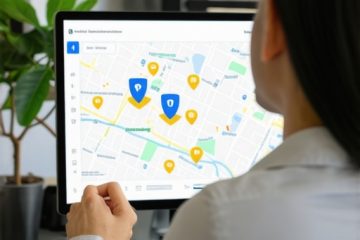
One Address Typo That’s Routing Your Oakland Customers to a Competitor
Imagine a potential customer is walking down Broadway toward Jack London Square or navigating the busy intersections of Telegraph Avenue. They realize they need a service you provide – perhaps a quick repair, a legal consultation, or a table for dinner – and they pull out their phone to search for a business “near me.” In a perfect world, your Oakland business should be the first result they see. But because of a single character error in your address – a “St” instead of a “St. #201” or an incorrect zip code – your business is invisible. As an Oakland-based Lead Local SEO Specialist, I see this daily. I’m Jeffrey Magner, and I’ve spent years helping Bay Area brands reclaim their digital territory. This isn’t just a clerical oversight; it is what Rio SEO research identifies as a “silent killer” of local rankings. When your google business profile optimization is undermined by a typo, you aren’t just losing a lead; you are actively handing that customer to your competitor across the street.
The Technical Cost of NAP Inconsistency in the Bay Area
In the world of local search, NAP stands for Name, Address, and Phone number. While it sounds simple, the technical implications are profound. Google’s algorithm functions primarily as a “trust engine.” Before Google recommends your business to a user in the Fruitvale district or Grand Lake, it must be 100% certain that you are where you say you are. If your website lists your address as “123 Main St,” but your Google Business Profile (GBP) says “123 Main Street, Ste 4,” and your Yelp profile says “123 Main St. Suite 4,” Google’s confidence in your data drops significantly.
This drop in confidence has a direct financial impact. Research from Apotheca Marketing indicates that mismatched information leads to lost sales opportunities and severe reputation damage. When Google encounters conflicting data, it chooses the “safe” route: it stops showing your business in the coveted “Map Pack.” For an Oakland business, this is catastrophic. The competition here is fierce, and if your data isn’t perfectly synchronized, you’re essentially opting out of the local economy. Beyond just rankings, think about the user experience. If a customer follows a map pin to a location that doesn’t exist or doesn’t have the correct suite number, their first interaction with your brand is one of frustration. This technical failure is often the root cause of why many shops struggle despite having great reviews. To learn more about common pitfalls, check out my guide on 7 Hidden Listing Errors That Stop Bay Area Locals From Finding Your Shop.
Why Google “Shadow Bans” Inconsistent Oakland Profiles
Google’s local search algorithm relies on three main pillars: Proximity, Relevance, and Prominence. When your address data is fractured, the Proximity signal is the first to break. Google cannot verify exactly where you are located relative to the searcher if your address strings don’t match across the web. This leads to a phenomenon I call “shadow banning,” where your profile technically exists but is pushed so far down the results that no one ever sees it. Mastering google business profile seo requires a deep understanding of how these signals interact.
Recent insights shared within the SEO community on Reddit highlight a critical behavior: changing an address or having inconsistent data triggers a “cooling-off period.” During this time, Google re-verifies local signals, often resulting in a significant “dip in rankings.” For an Oakland business owner, “tinkering” with an address without a strategic plan can lead to weeks of zero visibility. If Google detects that your address on your website’s footer differs from the official USPS record or your GBP, it views your business as less “prominent” and less reliable than a competitor with a clean, consistent data trail. In the high-stakes environment of the Bay Area, where every click counts, you cannot afford to have a fractured digital footprint.
The Competitor Hand-off: How Your Typo Becomes Their Lead
The “Map Pack” – those top three results on a Google search – is the most valuable real estate in the digital world. When your profile suffers from a “Ghost Address Error” (a term I use for addresses that are technically incorrect or unverified), Google’s algorithm doesn’t just leave a blank space. It moves to the next best option. This is the “Competitor Hand-off.” Because your address had a typo, Google skipped you and displayed your competitor who has a verified, consistent address, even if they are further away or have fewer reviews.
This is why high-quality rank higher on google maps strategies always begin with a citation audit. If you are a dentist in Rockridge and your address is listed incorrectly on a minor directory like the Yellow Pages, it can still pull down your primary ranking on Google. The algorithm cross-references these “citations” to build a map of truth. If the truth is muddy, the lead goes to the guy with the clear data. You are essentially paying for your competitor’s marketing by failing to secure your own. Don’t let this happen to you; read more on how to Stop Losing Oakland Customers to Competitors With Better Map Pins.
The Verification Trap: Navigating Address Changes in 2025-2026
Correcting an address error is no longer as simple as clicking “edit” and waiting twenty-four hours. As we head into 2025 and 2026, Google has significantly increased the friction for address changes to combat spam. One of the biggest hurdles today is the shift toward video verification. If you attempt to fix a typo, Google may require you to film a continuous video showing your street sign, your building exterior, and your interior tools of the trade. This is a major hurdle for many businesses, and if not done correctly, can lead to a permanent suspension of your profile.
I’ve seen business owners get stuck in a “verification loop” where they try to fix a suite number, get flagged for suspicious activity, and then lose their ranking for months. Utilizing professional local seo tools is essential for monitoring these changes and ensuring that your data is pushed out to the “Big Three” data aggregators (Data Axle, Foursquare, and Neustar Localeze) before you even touch your GBP. This creates a foundation of “truth” that makes Google’s verification process much smoother. YouTube troubleshooting trends show that “Google Business Profile Video Verification” is one of the most searched-for terms by frustrated business owners, proving that the DIY approach is becoming increasingly risky.
Step-by-Step: Auditing Your Oakland Business Address for 100% Accuracy
To ensure your business isn’t leaking revenue, you must perform a rigorous audit. In my experience as an Oakland SEO strategist, I recommend the following checklist for every local business from Piedmont to East Oakland:
- Check USPS Official Formatting: Use the USPS Zip Code Lookup tool to find the “standardized” version of your address. If the USPS says “STE” and you use “SUITE,” change yours to “STE.”
- Audit Top-Tier Citations: Manually check your listings on Yelp, Bing, Apple Maps, and Facebook. These are the secondary sources Google trusts most.
- Sync Your Website Footer: Ensure the address in your website’s footer is an exact character-for-character match with your Google Business Profile.
- Implement Schema Markup: Use LocalBusiness Schema to tell Google’s crawlers exactly where you are in a language they understand (JSON-LD). This is a core component of any google maps ranking service.
Many businesses overlook the power of technical code. For instance, we use specific structured data to link your social profiles and your physical address in a way that “glues” your brand together in the eyes of the algorithm. You can see the details in my post on The Exact Schema Markup We Use to Help Bay Area Shops Outrank Chains. A clean audit is the only way to ensure you are eligible for the highest possible rankings.
Future-Proofing: AI Search Filters and 2026 Local SEO Trends
The landscape of search is changing with the rise of AI-driven search (SGE) and voice assistants like Alexa and Siri. These technologies are even less forgiving of address typos than traditional search engines. AI models thrive on structured, consistent data. If a voice assistant cannot parse your address because of a formatting error, you simply do not exist in that search result. As we move toward 2026, “near me” searches will become even more personalized, and Google will use AI to filter out any business that has even a hint of data inconsistency.
Future-proofing your Oakland business means moving beyond simple keywords and focusing on “entity-based” SEO. Your business is an entity, and its primary attribute is its location. If that attribute is corrupted by a typo, the entire entity is compromised. Staying ahead of these shifts is vital for long-term survival. I’ve outlined the upcoming changes in my latest article: 5 Oakland Local SEO Fixes to Outsmart 2026 AI Search Filters. The time to fix your data is now, before the AI filters become the primary gatekeepers of local commerce.
Conclusion: Reclaiming Your Oakland Territory
In the competitive Oakland market, there is no room for “close enough.” A single address typo is a leak in your revenue bucket, quietly routing your hard-earned leads to your competitors. Whether you are located on Grand Ave or in the heart of the Fruitvale, your digital presence must be anchored in 100% accurate NAP data. Correcting these errors and maintaining google business profile seo is the most effective way to protect your territory and grow your business.
Don’t let a clerical oversight destroy your hard work. Perform a citation audit today, or contact me, Jeffrey Magner, for a professional Google Business Profile audit. Let’s make sure when Oakland searches, they find you – not the guy down the street.