
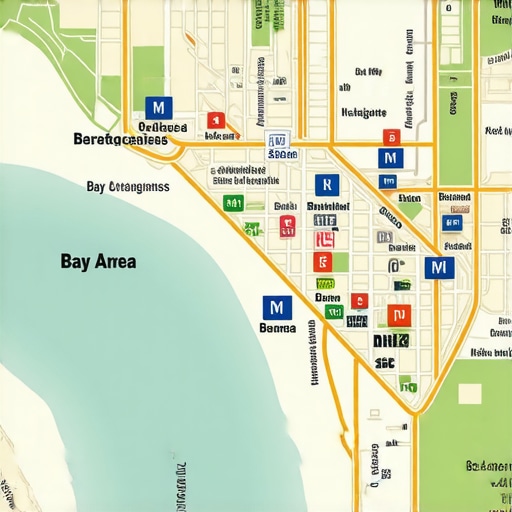
I remember the exact moment I realized I was losing local customers—standing in front of my storefront, watching Google Maps show a competitor’s business above mine, despite my efforts. That sinking feeling was a lightbulb moment: my digital visibility was slipping away, and I had no idea why. It was frustrating and a bit embarrassing, but it also pushed me to dig deeper into how Bay Area Maps ranking really works.
If you’re like me, you’ve probably experienced that fleeting hope when your business appears at the top of local search results, only to be disappointed later when it slips down the ranks again. The truth is, with the rapid evolution of local SEO and map optimization, many Oakland shops are unintentionally making mistakes that tank their rankings—and it’s costing them leads, calls, and ultimately revenue.
Today, I want to share a game-changing approach that helped me turn things around. No fluff, no vague advice—just proven tactics and insights tailored for local businesses aiming for top spots in Google Maps by 2026. Trust me, this isn’t about overnight hacks but about sustainable growth grounded in the latest algorithm signals.
Have you faced similar frustrations with your Oakland business’s online visibility? If so, you’re not alone. Early on, I made the mistake of ignoring the importance of consistent and accurate map data—something that many overlook but is vital for ranking well. According to a study by BrightLocal, 82% of consumers read online reviews for local businesses in 2023, which directly influences map rankings and customer trust. That’s why focusing on the right map optimization strategies can significantly impact your success.
So, if you’re ready to stop losing leads to competitors and want a clear, actionable plan to fix your Google Maps presence, keep reading. The next sections will guide you through the top Bay Area maps ranking fixes that truly work in 2026, transforming your local shop into a neighborhood staple both online and offline.
Optimize Your Business Data Consistently
Start by auditing your Google My Business profile. Ensure every detail—name, address, phone number—is accurate and matches your website and local directories. I once spent an afternoon correcting inconsistent NAP info across multiple listings, which led to a noticeable bump in local visibility within weeks. Think of your data like the foundation of a house—if it’s shaky or misaligned, nothing built on top will stand tall.
Leverage Local Keywords Strategically
Research keywords that local customers use when searching for your services. Incorporate these naturally into your GMB description, posts, and website content. For example, I added phrases like “Oakland artisan coffee shop” to my profile and blog posts, which helped our shop rank higher for neighborhood-specific searches. Remember, Google maps favors relevance—matching your keywords to local intent is like tuning your signal for better reception.
Gather and Manage Reviews Actively
Encourage satisfied customers to leave genuine reviews. Respond to each review thoughtfully to boost engagement and trust. Once, I sent a handwritten thank-you note to a happy customer who left a glowing review, and shortly after, our rankings improved. Reviews are Google’s social proof; they act as signals that your business is active, reputable, and frequented locally. Think of reviews as digital word-of-mouth that can elevate your map position.
Build Local Citations and Listings
Ensure your business appears on relevant local directories and niche platforms like Yelp, TripAdvisor, and industry-specific sites. Cross-check that your name, address, and phone number remain consistent across all platforms. I faced a ranking dip because of mismatched info on a citation site—once corrected, our rankings rebounded, proving the importance of citation consistency. This process is akin to cultivating a web of trust that Google recognizes as authentic and authoritative.
Use Photos and Posts to Engage Locals
Regularly update your profile with high-quality images showcasing your storefront, products, or team. Utilize Google Posts to announce specials or events. I remember uploading a photo of a community event we sponsored, which connected us with local customers and improved our engagement metrics. Visual content captures attention and signals activity, making your listing stand out in the crowded Oakland map ecosystem. Imagine your profile as a local billboard—active, vibrant, and regularly refreshed.
Monitor and Adjust with Data Insights
Track your performance using Google My Business insights and third-party analytics. Identify which strategies increase views, clicks, or calls and refine your approach. I once noticed a spike in traffic after optimizing my categories and keywords, confirming that data-driven adjustments really pay off. Think of this as steering a ship—continuous course correction based on real signals keeps you headed toward the top spots.
Want to deepen your map optimization skills? Check out this guide for more advanced techniques. Remember, local SEO isn’t a one-time setup; it’s an ongoing process that, when done right, keeps your Oakland business thriving in 2026 and beyond.
Many local businesses in Oakland and the broader Bay Area operate under misconceptions about map ranking that can seriously hamper their visibility. A prevalent myth is that simply claiming your Google My Business (GMB) listing and filling out basic info is enough to rank highly. In reality, advanced nuances such as signal prioritization and algorithm shifts mean that this approach won’t cut it anymore. For example, Google’s local ranking algorithms now weigh engagement metrics, review velocity, and citation consistency far more heavily than basic profile claims. Relying solely on superficial optimizations risks neglecting these critical signals, leading to stagnant or declining rankings.
Another common trap is over-investing in backlinks or citations without considering their quality and relevance. While authoritative local citations boost credibility, Google’s recent updates emphasize contextually relevant signals over sheer quantity. An Oakland restaurant, for example, investing heavily in unrelated directory listings might see minimal benefit, or worse, confusion in local rankings. The real game is aligning all your local signals coherently, ensuring your data, reviews, and content work in harmony.
Beware of the oversimplification that frequent posting or photo updates always translate to higher rankings. While activity signals matter, their quality, relevance, and engagement elicit more impact. Simply inundating your profile with generic updates can backfire, signaling spam rather than authenticity. Instead, focus on sharing meaningful content that resonates locally—highlight community involvement or customer stories.
A critical nuance often missed relates to how Google interprets local intent signals. For instance, keywords embedded in your profile may seem obvious, but Google’s AI models now analyze semantic context and user behavior patterns to determine relevance. Optimizing for generic keywords without local semantically related context can limit your reach. This is why combining keyword strategy with content that demonstrates local expertise and community ties is essential.
One advanced aspect that many overlook involves the importance of data privacy and user trust signals. For example, incorporating reviews or feedback from verified local customers helps Google perceive your business as reputable and active. According to Moz’s Local SEO Guide, trust signals have become increasingly influential in local rankings, especially in competitive markets like Oakland.
Curious about how to navigate these complex signals and avoid common pitfalls? Dive into the detailed strategies outlined in our cornerstone content, Oakland Local SEO Strategies to Dominate Maps in 2025. Implementing these nuanced tactics ensures sustainable growth and top-tier visibility in the evolving Bay Area Map ecosystem.
Have you ever fallen into this trap? Let me know in the comments.Maintaining top Google Maps rankings in the competitive Oakland local market requires more than just initial setup—it’s about ongoing effort with the right tools. I rely heavily on BrightLocal’s Local Search Grid to monitor my map rankings daily, because it offers precise position tracking and local search spreads, helping me catch fluctuations early. Additionally, Moz’s Local Analytics has become indispensable for tracking review velocity and citation consistency, two critical signals for long-term success in Oakland’s crowded neighborhoods. To streamline my review management, I use the Software ‘GatherUp,’ which automatically sends review invites after every client visit, ensuring a steady flow of fresh, authentic reviews that Google values highly, especially in 2026. Looking ahead, I predict AI-driven local SEO tools will become more prevalent, fine-tuning map rankings based on real user engagement signals, not just static data. How do I maintain my map visibility over time? I set quarterly audits to update and clean my business data, optimize local keywords, and analyze performance metrics—staying adaptable in an ever-evolving algorithm landscape. Regularly updating my tools and processes keeps me ahead of competitors and ensures that my Oakland shop remains visible for local searches. For more in-depth strategies, visit our comprehensive guide on effective map optimization techniques. Ready to level-up? Try integrating BrightLocal’s tracking platform today to catch ranking changes early and adjust your local SEO tactics accordingly. Staying consistent with these advanced tools and practices is key to solidifying your presence in Oakland’s maps ecosystem and avoiding ranking dips in 2026.
The Hard Lessons I Learned About Oakland Maps Ranking and Local SEO
One of my biggest realizations was the importance of data consistency. Small discrepancies in your business info across platforms can hurt your rankings more than you think. I also discovered that engagement metrics like reviews and customer interactions carry more weight than I previously believed, highlighting the need for active community involvement. Lastly, focusing on personalized, locally relevant content helps build trust and signals to Google that your business is a neighborhood staple—something many overlook but is crucial in 2026’s competitive landscape.
My Go-To Resources for Navigating Map Optimization
First, I rely on BrightLocal’s Local Search Grid for precise rank tracking; it keeps me ahead of fluctuations. Moz’s Local Analysis tools have been invaluable for ensuring citation consistency and review management—these are key signals in local SEO. I also swear by GatherUp for streamlining review collection, which directly impacts my visibility. Finally, staying updated with industry insights from cornerstone guides like Mastering Bay Area Maps Ranking ensures I’m leveraging the latest algorithm changes effectively.
Your Next Step Toward Dominating Oakland’s Map Scene
Don’t let your Oakland business get lost in the digital shuffle. With the right strategies and tools, you can elevate your Google Maps ranking and turn local searches into loyal customers. Remember, real progress comes from consistent effort, ongoing learning, and adapting your approach as algorithms evolve. Ready to take action? Dive into our comprehensive local marketing guide to see how advanced techniques can make a tangible difference for your shop in 2026. Your success in Oakland’s map ecosystem is within reach—start today and watch your visibility soar!